How 5o Become a Homr Care Provider for Family Members in Wv
Coronavirus: How the world of work may modify forever
(Image credit:
Emmanuel Lafont
)
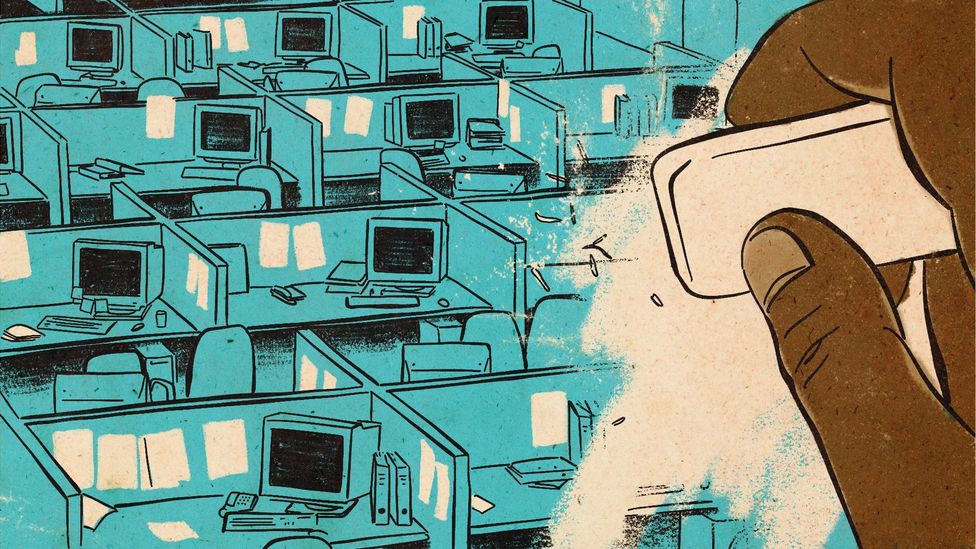
Covid-19 upended our jobs. We've tried to adjust, but what about the long term? BBC Worklife asks dozens of experts to flag the biggest questions we should exist asking in 2020 and beyond.

More than vii months take passed since the World Health Organization declared Covid-nineteen a pandemic. Hundreds of millions of people have lived through lockdowns. Many have made the abrupt shift to working from home; millions take lost jobs. The future looks uncertain. We don't know when, or if, our societies might return to normal – or what kind of scars the pandemic will leave.
Amid the upheaval, BBC Worklife spoke to dozens of experts, leaders and professionals across the globe to ask: what are the greatest unknowns we face? How will nosotros work, live and thrive in the post-pandemic future? How is Covid-19 reshaping our world – potentially, forever?
We'll curl out these important views from some of the top minds in business, public health and many other fields in several manufactures over the adjacent few weeks. We'll hear from people including Melinda Gates on gender equality, Zoom founder Eric Yuan on the time to come of video calls, Lone Planet founder Tony Wheeler on what's next in travel and Unesco chief Audrey Azoulay on the ideals of artificial intelligence.
Today, nosotros're starting past looking at the issue of work: how the pandemic has normalised remote work, and what that might mean. Volition we go to the office once more – and, if and then, how often? What impact will a 'hybrid' manner of working have on how nosotros communicate, connect and create? Will work-from-home exist the groovy leveller in terms of gender equality and diverseness? And what will work hateful if our offices are virtual and we lose those day-to-day social interactions?
We're also examining what happens to people who can't work from dwelling equally well as those whose jobs depend on a steady catamenia of traffic into urban hubs. Can we learn from Covid-19 and build better safety nets for the near vulnerable workers? And if the time to come is digital, how do we make sure swathes of the global population aren't left behind?
"We all know that work will never be the same, even if we don't all the same know all the ways in which information technology will be different," says Slack co-founder and CEO Stewart Butterfield. Just we've started asking the questions – and here's what our experts had to say.
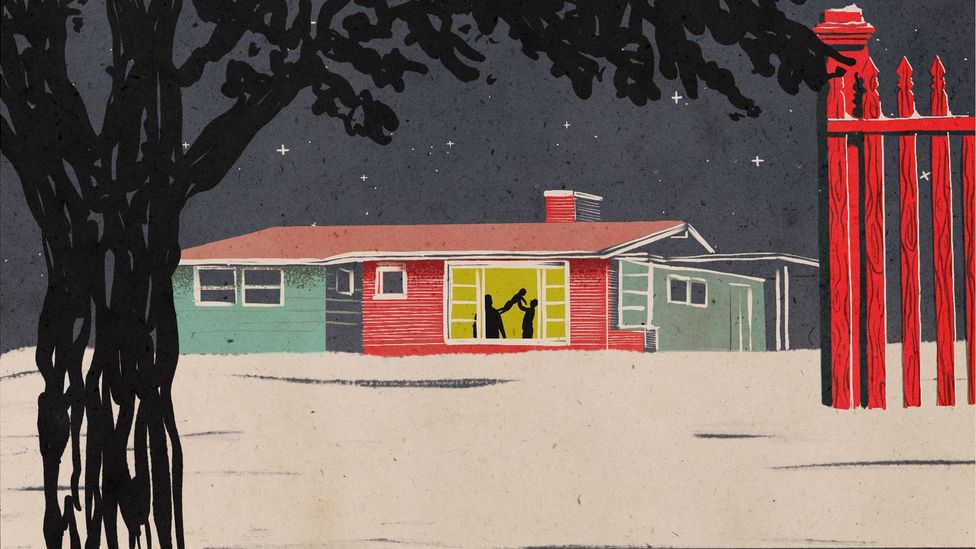
Many are spending more fourth dimension than ever within their homes, as remote work, altitude learning and social distancing shape the workweeks of many families
Melinda Gates: Co-Chair, Neb & Melinda Gates Foundation
What is the future of gender equality? Will the world finally get serious nigh gender equality? That's a question of long continuing, but I'm request information technology even more than insistently now. Because when the world's economies were pushed to the brink, information technology was women who cruel over the edge.
Women were already clustered in depression-paying jobs. When the pandemic hitting, they were more probable than men to lose those jobs. According to 1 written report, i.8 times more than likely.
That's just paid work. With billions of people staying home, the need for unpaid work – cooking, cleaning, and childcare – has surged. Women already did about three quarters of that piece of work; in the pandemic, the breakdown is fifty-fifty more than lopsided.
Of course, the paid and unpaid economies are intimately connected. (One is a lot more visible, but information technology's built on top of the other!) The unpaid work women practise is ane of the biggest barriers they face to reaching their potential in the workforce.
I hope Covid-19 forces united states of america to confront how unsustainable the current arrangement is – and how much nosotros all miss out on when women's responsibilities at home limit their power to contribute beyond it. The solutions lie with governments, employers and families committed to doing things more than equitably.
Stewart Butterfield: CEO and co-founder, Slack
How many people actually want to work in offices?
We all know that work will never exist the same, even if we don't notwithstanding know all the ways in which it volition be different. What we tin say with certainty is that the sudden shift to distributed work has provided a once-in-a-generation opportunity to reimagine everything about how we exercise our jobs and how nosotros run our companies.
If nosotros can move past decades of orthodoxy virtually 9-to-5, office-centric work, there'southward an opportunity to retain the best parts of office culture while freeing ourselves from bad habits and inefficient processes, from ineffective meetings to unnecessary bureaucracy. Every leader believes they can do meliorate, and things can motility faster: this is their run a risk.
From the employee perspective, the shift is massive and very consequential: people are making new choices about where they desire to live and creating new expectations nearly flexibility, working conditions and life balance that tin can't be undone. Our Future Forum enquiry of four,700 cognition workers found the majority never desire to go dorsum to the old way of working. Merely 12% want to return to total-time office work, and 72% want a hybrid remote-office model moving forward.
All this change in our methods will go hand-in-hand with a modify in our tools. Of grade, we think Slack has an of import role to play as a new kind of headquarters for a digital first world, but the opportunities for digital transformation are expansive and wide-ranging. Businesses that do it well will drive engagement, achieve organisational agility, maintain alignment and empower teamwork beyond all disciplines and locations. They volition have a competitive reward in this new era of piece of work.
Elisabeth Reynolds: Executive Director, Job Force on the Work of the Hereafter, Massachusetts Establish of Engineering
What happens to the workers that remote jobs leave behind?
For those who tin can piece of work from dwelling (approximately xl% of Usa workers largely from the higher educated quartile), our daily feel of work will change significantly. Commuters will proceeds an hour back on boilerplate in their day and estimates suggest that post pandemic, some portion of the week will involve working from abode – from one to three days a week. A hybrid model is likely to emerge that volition try to balance the efficiencies gained by remote work with the benefits of social interactions and to creativity and innovation generated by working in person with others.
Just the greatest claiming that we face regarding work is what happens to the other 60% of workers who can't work from home. The decline in daily commuters equally well as business travel has a knock-on effect on those whose jobs support and serve these workers and offices. A full one-in-iv workers are in the transportation, food service, cleaning and maintenance, retail and personal care industries. These jobs, frequently full-bodied in cities and lower paid, are disappearing or are at risk of disappearing in the near term. We need to shore upwardly the social safety net and invest in ways to further skills and increase admission to educational activity and training for our near vulnerable workers.
Indranil Roy: Executive Director, Man Capital practice, Deloitte Consulting
How tin companies get 'virtual starting time'?
More than half of the global workforce is working remotely and as the pandemic continues to threaten health, we are looking at a prolonged period of hybrid working – from home and function in unlike proportions.
Some lessons learned: nosotros tin can reach most tasks remotely without pregnant drib in productivity or quality. Nigh employees appreciate flexibility, peculiarly those with long commute times. Over time, notwithstanding, face-to-face interaction is required to facilitate collaboration, build relationships, solve complex challenges and generate ideas. Continuous remote work extends the work day, diffuses piece of work-life boundaries and reduces mental wellbeing.
Given these pros and cons, organisations have to rethink their working arrangements. This re-calibration will eventually settle on a sustainable new normal, probable a hybrid workforce and distributed workplace.
Enterprises adopting this new way of working – "virtual-get-go" – accept these characteristics: One, the workplace is distributed beyond home, part and satellite offices. Employees can choose to piece of work remotely or contiguous based on their nature of work and teams' preferences. Two, the teams are virtual gear up. Managers know how to manage, coach, collaborate, evaluate performance and motivate their squad remotely. Three, the technology enables multiple modes of working. Data is saved on deject; access and security are tailored for different working modes; and applications allow seamless virtual collaborations. Iv, the culture prioritises trust and belonging. Interpersonal bonds are formed with intent and care.
With these four disquisitional moves, organisations can transit to a hybrid-workforce model and build a "virtual-kickoff" enterprise.
Diane Coyle: Co-Director, Bennett Institute for Public Policy, University of Cambridge
What is the role of the state in this new economy?
The economic shock acquired by the pandemic is making even more pressing some of the questions about the economy that many people had already started to inquire. In that location is a demand to 'build back better' equally the phrase goes, because information technology was clear that some things had already started to go wrong and accept now gotten worse.
For example, 1 is low pay and terrible conditions of piece of work in the types of jobs nosotros've been praising as 'key workers', in everything from care homes to commitment drivers and warehouse staff. Some other is the terrifying reject in environmental indicators from extreme weather events and loss of biodiversity – both threatening food supplies – to polluted air and the consequences for human health.
I would highlight an underlying question about the role of the land in the economy. We accept grown used to the thought that regime and markets are split up spheres, and the market generally knows all-time. Yet in the crisis responses beyond the earth, we have a sit-in of how dramatically governments can intervene in managing the economy. It might take years for the country role to unwind fifty-fifty if a regime wanted to do so. But, with a focus on new infrastructure investment and green transition, on establishing job schemes, on making up for the educational arrears due to disrupted learning through 2020 and across and on supporting key industries such as travel and the arts, I think there will be a lasting modify in perceptions of the function of the state.
Eric South Yuan: Founder and CEO, Zoom
How volition video calls continue to shape businesses?
Now that the world is familiar with video communications, the way businesses and individuals communicate and connect will be forever changed.
Healthcare, education, finance and businesses big and small are growing and improving with the help of video communications. This year solitary, hundreds of thousands of small business owners – yoga and piano instructors, therapists, accountants and others – maintained and even grew businesses using video to connect with customers. Nosotros believe that model will exist a large part of our futurity, and so we've made those interactions easier with OnZoom, a new all-in-one solution for Zoom users to create and host gratis and paid events on Zoom.
In the well-nigh future, some organisations will adopt a hybrid-piece of work model, with sure days in the office and others remote, and might align employees' in-office and remote schedules to create disinterestedness. Other companies will employ video communications to exist completely remote. Both models will savor increased productivity and deeper collaboration, and the ability to attract a more than diverse workforce.
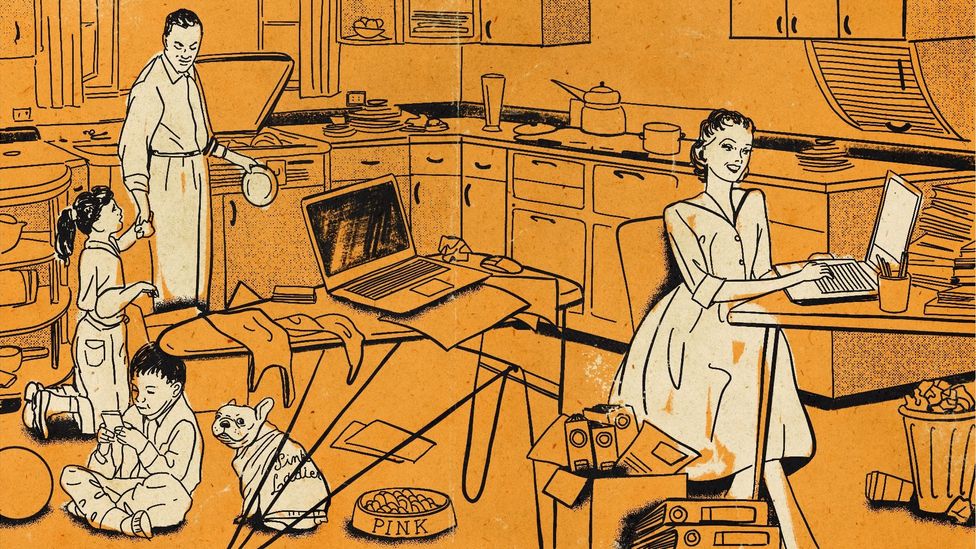
Long-term remote piece of work has completely reshaped the 9-to-v and blurred the lines between home and office
Erica Brescia: Chief Operating Officer, GitHub
How will workers interact with each other?
The time to come of work will exist distributed. We're going to see a big shift from role by default to remote by default. GitHub has been a predominantly distributed visitor with people working across the earth, which has helped us learn and evolve speedily. With people in every part of the company working remotely for years, we've seen how virtual interactions bulldoze innovation.
With Covid-xix, we're rethinking how nosotros design and utilize our office spaces – making them more most bringing the community in and placing an emphasis on virtual events. Remote by default will as well strength people to reframe the way they communicate and connect with people at work. Those whose superpower is connecting with people live and bringing energy to conversations will need to become good written communicators. And companies who do not have a strict demand for physical interaction are going to take to operate more like open source communities – distributed, asynchronously and online. We will quickly come across a material shift in who succeeds in this new mode of working.
Robin Dunbar: Emeritus Professor of Experimental Psychology, University of Oxford
Is remote working overhyped?
The final few months has seen a swell bargain of media hype about new means of working – the dispersed office and working from dwelling house. No more of the drudgery of the morning commute, the arrival home wearied long after the children accept been put to bed. Alas, it is all hype. We accept forgotten that nosotros tried it 20 years ago and very quickly gave it up. At the fourth dimension, big business organization with expensive London existent estate spotted it as a way of radically reducing their overheads. A round of golf over lunch, and collecting the kids from school… what could be better? At a personal level, information technology probably is better, but it didn't concluding long – for 3 very good reasons.
Commencement, the work place is a social surround and business in whatever form is a social phenomenon. Without face-to-face appointment, and those casual meetings round the coffee machine, the 'flow' that makes things work, and work fast, will be missing. Work groups quickly lose focus, and the sense of belonging – and of delivery to the organisation and its aims and objectives – is very speedily lost.
Second, nosotros accept been in the midst of a loneliness epidemic among the 20-somethings for the improve part of the last ii decades. It is a item trouble for young new graduates moving to an unfamiliar city on their outset job. With no family or friends nearby, work is the only place they tin can find friends and arrange social events. "We come in to work to come across our friends!" has been their response to surveys.
3rd, the digital world of Zoom and Skype is no substitute for face-to-face meetings. It is easy to hide away reading your emails and newsfeed. People observe the virtual environment awkward and very quickly go bored. There is a very strict limit on the size of natural conversations at 4 people. Anything bigger, and it becomes a lecture dominated by a scattering of extraverts.
Jean-Nicolas Reyt: Assistant Professor of Organizational Behaviour, McGill University
Could working from home increase gender equality?
Even equally modern organisation are challenged past attracting, retaining and promoting talented employees, they underutilise one major source of bachelor talent: women. Women account for half of all entry-level employees, yet they compose but a third of senior managers and a 5th of C-suite executives. One of the reasons women have a harder time advancing professionally is that they are much more probable than men to prioritise their family responsibilities over their careers.
Giving employees more than flexibility in choosing when and where they work tin increase gender equality via two pathways. First, research has long established that remote piece of work can aid mothers better balance their work and family unit responsibilities, which makes them less likely to sacrifice i for the other. Second, data collected during the pandemic suggests that working from domicile may also make the father more than involved. More couples share family responsibilities more than as now than they did earlier the pandemic, according to a survey of American couples. In a survey of Canadian fathers, a majority written report doing more household chores and spending more than time with their children now than they did earlier the pandemic.
If organisations connected to offering remote work opportunities after the pandemic is over, more than women will have a level playing field.
Reetika Khera: Acquaintance Professor, Indian Plant of Technology, Delhi
Will our jobs all the same give us value?
To me, the most significant realisation due to the pandemic and related restrictions, has been that people have get aware of the – call it 'social' or 'intrinsic' – value of piece of work in our lives. For many, those much loathed and dreaded 3 words – 'going to piece of work' – is something they crave.
I'k not referring to those who have lost work and income and demand it to survive. I have in mind those who are comfortably working from home, even rediscovering old loves (such as cooking or sketching), honing new skills (many are blistering) and and then on. I'm referring to work broadly, including students who are longing for lectures fifty-fifty. There are signs of this beyond economic classes. Even the admittedly small fraction of domestic workers who continued to be paid through the lockdown were restless to resume piece of work.
For different reasons, nosotros're socialised into thinking that work is about money. With WFH people have connected to enjoy the economic value of work, only they still feel like there is a hole in their lives. The obvious next step is that we value other people's work, even when it is lower paid. Unfortunately, that has not happened.
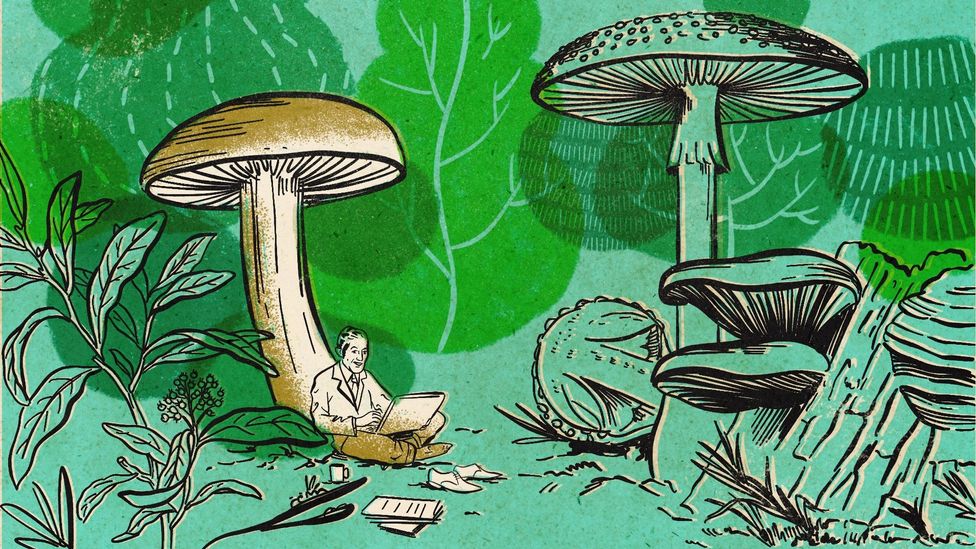
For those who are able, remote work has allowed people to practise their jobs in secluded areas outside of cities. But such a luxury has also shined a light on existing inequalities
Karin Kimbrough: Chief Economist, LinkedIn
How is remote working changing job searches?
We're seeing a huge increment in demand for remote piece of work on our platform, one that will have a pregnant long-term touch on the labour market. Globally, nosotros're seeing four times the number of jobs that offer remote piece of work since March. We too meet that trend reflected from jobseekers: the volume of chore searches using the "Remote" filter on LinkedIn has increased ~60% since the beginning of March, and the share of Remote Job Applications has increased nearly 2.v times globally from March.
The advent of remote work and an increasingly virtual earth seems to have reduced barriers for people to connect and build their networks. Lately, LinkedIn members are more probable to connect with others outside of where they live.
With the ascension of remote work, i of the most exciting trends that we're going to see is a democratisation of opportunity and motion of skills all effectually the globe. Companies may be able to source diverse talent more than easily, particularly from groups that are underrepresented in their area, or for skills that are locally less available, through remote-work options.
Naohiro Yashiro: Professor, Global Business, Showa Women's Academy
Volition white-collar workers get more freedom?
Covid-19 is reshaping the traditional urban work manner in Japan. In Tokyo, 2.iv million people commute in the crowded trains every 24-hour interval. The Covid-xix pandemic forces remote piece of work for many employees, who find it quite efficient and comfortable. However, the flexible combination between work and family life at home is interrupted past the rigid labour law that forces the employer to monitor the working hours of the employees from 9 to six, including lunchtime interruption. The law was originally established based on the blue-collar work style, and information technology mechanically applies to the white-collar jobs. The current official guideline for teleworkers requires the employees to have an hourly paid holiday when they exit temporarily from the work at home.
Nevertheless, the expansion of the new workstyle facing the Covid-19 will eventually not only release the white-collar jobs from the restrictions on time and place, but it should change the traditional unspecified job style nether a lifetime delivery toward more specific contract-based employment. An increasing number of teleworkers would exist an important step toward activating the elderly and handicapped workers and raising the labour productivity of the white-collar workers by letting them complimentary from rigid fourth dimension-based management in Japan.
Jeanna Lundberg: Co-Founder and CEO, Respaces
What is the future of workspaces?
A few months ago, I had the luxury of a beautiful office close to home, and a boss who would allow me to work from home whenever I wanted. My friends were envious, equally almost all of them were expected to work from the same desk every day.
And so Covid-xix hitting, and show-upwardly culture was officially dead. No one was expected to evidence up anywhere. All of a sudden companies were forced to leave the standard function buildings behind, and trust both applied science and their employees to truly work remotely. And then, what have we learnt and then far?
If I ask my friends if they would similar to get back full-time to working from ane role, five days a week – most people say no. They like skipping the obligatory commute, feeling trusted by their bosses, and having the freedom to customise their days to their personal needs. Just they as well complain that the home office is cramped, boring, and lonely subsequently a while.
Companies have discovered that both remote piece of work and trusting employees is not only possible, but in many cases more assisting. Employees remain constructive and productive, and they feel improve, too. Many are at present questioning the need for the big, expensive and static part they used to have.
So, if the general population won't exist going back full-time to the office, but also won't be staying at home full-fourth dimension – what is the future of workspaces?
Covid-19 taught u.s. the importance of flexibility and trust, from economical, sustainability and wellness perspectives. As companies dare to explore options beyond the '1-size-fits-all' office solution, we tin can start sharing spaces in a new style. Imagine if you could have access to inspiring new locations adapted for different tasks and projects – wherever you lot are.
Rashmi Dhanwani: Founder, the Art X Visitor
What does employee trust look similar?
In the formal economy, we have observed that the impact has been virtually evident around intangible ideas of trust, accountability and boundaries. In India, we have operated on a trust deficit in the workplace, which made information technology necessary for specific hierarchical and social structures to exist in place.
The pandemic, the disruptions information technology has caused to what we know and the enforced move to work from home has allowed for a multi-polar power dynamic to emerge with power bases shifting from leaders and experienced bosses to younger professionals more skillful at adapting to digital working environments. Secondly, with the transparency of processes, allocation and condition updates that digital planning tools bestow, employee accountability to tasks is fabricated more visible to anybody across the work chain, leading to challenging the aforementioned trust arrears. Lastly, boundaries between role and personal space, digital and lived experiences and piece of work and play have become far more fluid. It remains to be seen how organisations are able to capitalise on opportunities arising out of this unprecedented situation, while too syncing it into creating a "better normal" for its employees.
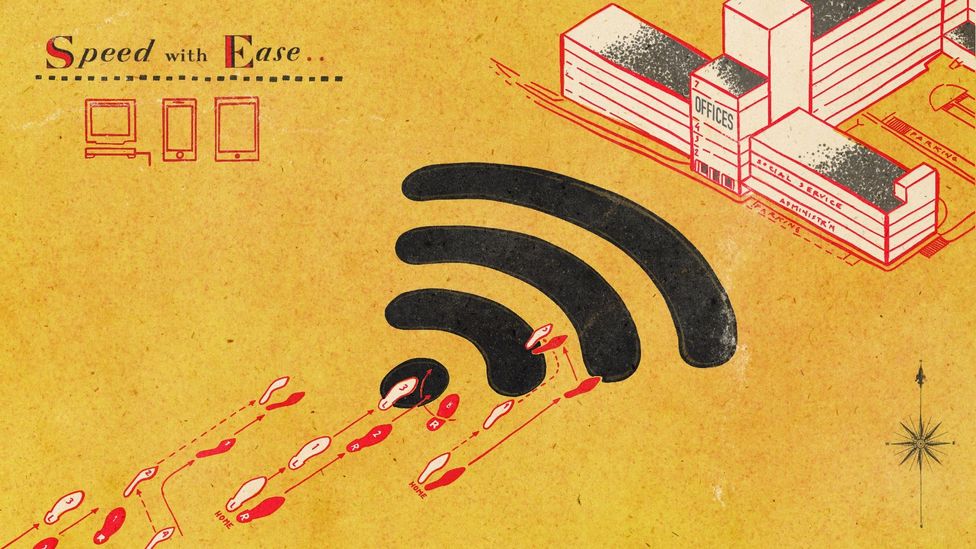
Hit a balance between concern as usual and social distancing has been a delicate dance, and simply possible for those who have quality internet access
Karen Mills: Senior Fellow, Harvard Business School and Former Administrator, US Small Business Administration
Is being an entrepreneur harder than always?
Small businesses and entrepreneurship are the subconscious assets of every democratic society. In the US, they have long been the pathway to the American Dream. But what if this pathway became less available in the future? Information technology'due south getting harder to start a business concern in the US, and entrepreneurship is already on the decline.
Ane way to contrary this tendency is by widening access to capital. Fintech [financial engineering science] lenders can help fill up the gaps left past banks in underserved markets and communities, although we must be vigilant that hidden biases in lending algorithms do not exacerbate existing disparities. The hereafter of access to upper-case letter remains unclear, but one affair is certain: if entrepreneurship fades, so will economic opportunity and mobility.
Jay Van Bavel: Associate Professor of Psychology and Neural Science, New York University
Volition our behavioural changes last?
Nosotros have just undergone the largest behaviour-modify experiment in the history of humanity. The question is, which new habits will stick around later on the pandemic is over? I retrieve it'south safe to say that people will quickly flock back to restaurants and bars, weddings and funerals, vacations and graduations once a vaccine has been developed. But it'south less clear if we will keep to wear masks during influenza season – which could save countless lives and ameliorate prepare u.s.a. for a hereafter pandemic – or proceed to piece of work from home.
The population has had a massive crash class in modern engineering science, then I think that these new skills and experiences will be the truthful engine of alter. For instance, now that companies have been forced to try telecommuting, I bet that many volition determine it'south less expensive and more efficient to allow people to work from dwelling. This has lots of second- and third-gild effects that we haven't considered. One possibility is that it could increment gender equity in the workforce as parents are better able to balance work and domicile life. Telecommuters might flock to smaller, cheaper cities or rural environments. But if they practice, this won't exist the end of large cities – I expect they will ascension from the ashes like a phoenix as artists and immature parents will suddenly be able to beget life in an urban hub.
The restructuring of club might seem frightening, but it provides the opportunity for radically new social arrangements that are not only more efficient, but also more humane.
John Trougakos: Associate Professor, Organizational Behaviour and HR Direction, University of Toronto
How do we modernise traditional work arrangements?
The Covid-19 pandemic has fundamentally shifted the way in which people work. Equally a result, traditional part jobs may never be the same. The pandemic forced millions of employees to work remotely, and numerous companies have elected to make this move a permanent feature of their business models. Nonetheless, in guild to maximise the benefits of working remotely, ways must be establish to ensure people remain productive and connected while non being overburdened.
Companies need to look at the pandemic as an opportunity to modernise how people piece of work. This should non only include a shift to having employees working from dwelling, but also being open to alternative schedules including ideas such as four-day work weeks and 6-60 minutes piece of work days. At the same time, employees must build resilience and actively preserve boundaries betwixt home and their task, not just to boost performance, simply to likewise maintain personal well-being. One way to help accomplish this is to empower workers by giving them more than autonomy in determining their working arrangements. Greater control over how and when to work leads to greater satisfaction, productivity and reduced stress. People may choose to work from home, go into the office or find alternating arrangements that work for them.
Local neighbourhood Covid-safe remote work spaces, such equally those offered by new companies like Toronto-based WorkMode, take arisen specifically to accost this growing demand. These types of spaces offer alternatives to big crowded office buildings, while providing employees a uncomplicated way to bargain with their work-home boundary dilemmas. The cardinal is to focus on keeping workers productive and good for you by giving them the freedom to piece of work in ways that arrange their needs while likewise meeting corporate objectives. Proactive and progressive companies will accept this opportunity to embrace this new normal and turn information technology into a competitive reward while simultaneously improving the lives of their workers.
Anna Stansbury: Inequality & Social Policy Scholar, Harvard University
Volition all workers now have a voice?
For the world of work, one of the biggest effects of the pandemic has been to illuminate the utter lack of vox and influence almost people have in their workplace.
This is starkest if you consider depression-paid essential workers in industries like food product or commitment – working for meagre pay at the best of times, in poor working conditions and during this pandemic often forced to choose between losing their income or risking contracting a disease which could threaten them and their loved ones. But it is likewise true for employees throughout the income distribution. Healthcare workers – on the front end-line in dealing with the pandemic – are dying at alarming rates, and are frequently forced to become without the data, the protective equipment or the workplace practices needed to stay safe. Employees in retail, in office jobs, in hospitality have hesitated to return to long days of working in enclosed spaces with poor air circulation – simply have oftentimes had no real choice in the matter.
And for many people, this has raised the question: why do I have so little say in my workplace? And: what can nosotros do to change this?
This desire for a greater voice in the workplace has manifested itself with strikes and walkouts across industries and countries, from warehouse workers in Milan to autobus drivers in Detroit, food packers in Northern Ireland to nurses in Hong Kong. Information technology has manifested itself with calls for greater unionization, or for employee representation on workplace health and safety committees. And, I expect, it will manifest itself over the longer term, in a generation which has viscerally experienced the risks of not having a meaningful vocalisation in their workplace – and who will put substantial emphasis on organizing for, advocating for, and voting for measures to strengthen employee representation and workplace republic in the future.
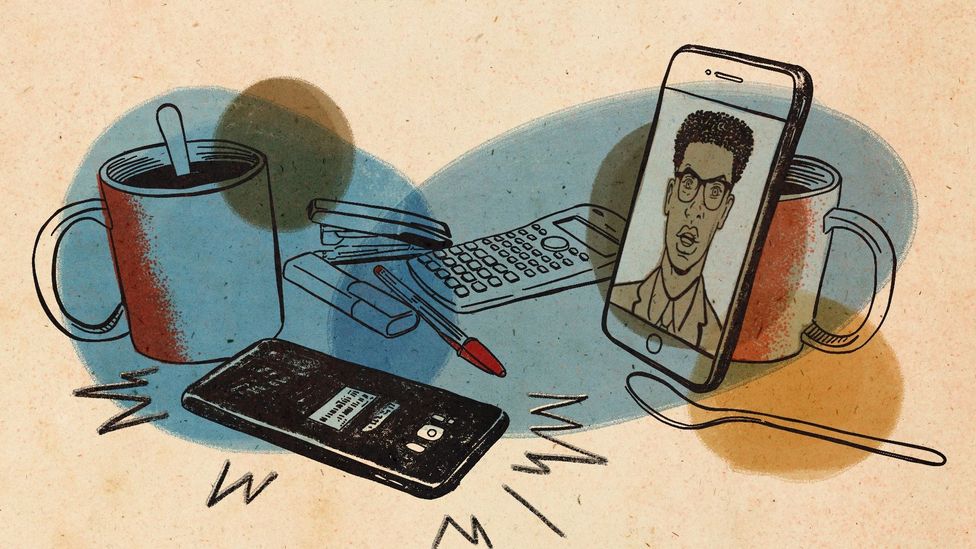
With in-person chats swapped for video calls, the mode we interact with colleagues might never be the aforementioned, even after Covid-19 infections subside
Chinmay Tumbe: Professor of Economics, Indian Institute of Management
Which divides between workers will deepen?
The pandemic is starkly reframing societal inequalities between those who have good bandwidth connectivity and those who don't. The former can work from dwelling, choose to live remotely, exercise at home and accrue their savings in a world with limited opportunities for instant gratification. The latter are either struggling or out of work, stalling mortgage payments, climbing down the nutrition ladder and dipping into their savings. This includes a large class of migrant workers, desperate for normalcy to resume, equally work from abode is not feasible and work virtually dwelling house is non available.
Unemployment and growing inequality could thus herald new political opportunities, if non outright revolutions. The post-pandemic globe volition likewise be interesting: a resumption of the consumerist economy with reduced time-horizons (why postpone purchases and exotic vacations when life can be so short) equally well as a nostalgia for the possibilities that the lockdown offered us – of streets without cars, of clean air and of spending quality time with family. Expect more suburbanisation and multiple-dwelling-ownership for the wealthy and a strong urge to upgrade digital skills among those non so well-off simply who desire to thrive in the new age loftier-bandwidth society.
Cary Cooper: Professor of Organisational Psychology & Health at Manchester University
Will presenteeism get worse?
The world of work will dramatically change over the side by side few years, not only considering of Covid, just also because of the deep recession we volition all be facing. There will, of course, exist more than flexible working – that is, people working essentially from home if they can and using a central function environment from time to time – only the ix-to-v in an function environment is expressionless. Even employers will want this given the recession because it will enable them to substantially downsize their estate costs.
Business travel volition virtually cease both inside the country and between countries too because people are reluctant to apply trains and planes and also employers want to minimise travel expenses – so Zooming, Skyping, etc. will exist the future of business relationships. Given the fears of redundancies and a massive increment in job insecurity, we volition encounter a great deal of presenteeism over the coming couple of years, which is likely to reflect itself in the short term by more visits to the key office environs to connect with part politics and to show facetime.
But in the medium term, [presenteeism volition be reflected] by people working longer hours and creating and attending more virtual meetings – which will not be good for the health of employees and their productivity. And finally, people in management roles will have to undergo a major transformation. We will need more managers from store floor to height floor who have emotional intelligence and social skills, if we are to manage people more than remotely, to identify when people are not coping with their work or suffering from mental ill health and to team build and develop in a virtual globe new products and services. In the past, we promoted and hired people to leadership roles based on their technical skills; in the hereafter, we will need managers who have parity betwixt their technical and people skills – this is a major shift in emphasis in the new world of work.
Scott Galloway: Professor of Marketing, New York University
The pandemic has accelerated societal change – will it last?
The pandemic's most enduring impact will be as an accelerant. While it volition initiate some changes and change the management of some trends, the pandemic'due south primary effect has been to advance dynamics already present in society – from eastward-commerce to online education to remote healthcare.
The biggest question facing the world as the pandemic recedes will be: volition these accelerations stick? Millions of people shifted their grocery purchases online – will they keep that upwardly after it is safe to shop in person? Thousands of colleges invested in distance learning technology, and their teachers and students developed new skills – will they leverage those investments to aggrandize their offerings across the traditional ivy-covered walls? And millions of people saw their medico, their therapist or their psychiatrist online for the commencement time – will they brand future appointments this fashion, saving time, money, and gas, or will they miss the physical closeness?
Beyond the world of business organization, the pandemic revealed and accelerated stark disparities in income, lifestyle and opportunity. Working class people got laid off, or – if they were accounted "essential workers" – were forced to risk their lives for minimum wage. While office workers relocated to their suburban homes and kept on collecting their $100,000 incomes. Volition the generation that came of historic period into such a world reject the organisation that produced information technology, push button for reform or decide that ruthless contest is their just hope?
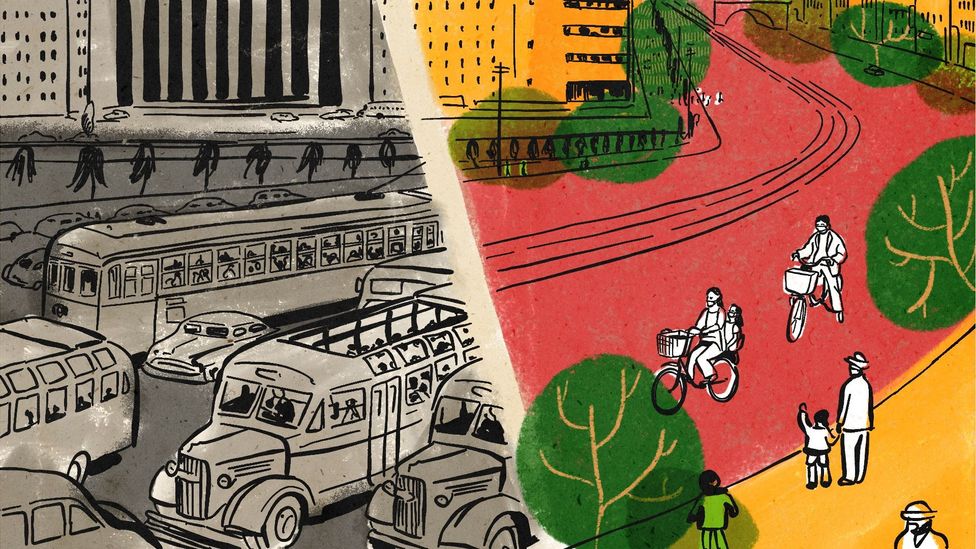
Commutes, a in one case daily ritual for workers around the world, have all but disappeared for many of them
Poornima Luthra: Founder and Chief Consultant, TalentED
What volition inclusive offices wait like?
It is the year 2020. What would a futurist in the early 1900s have predicted almost the state of equality in the year 2020? Information technology is quite likely that the predictions would have been around absolute equality for all man beings. And yet hither nosotros are, in 2020, still struggling with inequality, biases and discrimination in our workplaces.
As we pattern the workplaces of the mail service-Covid-19 era, we need to put inclusive workplaces for diverse talent at the forefront of how we think well-nigh the time to come of work. This volition need united states of america to embrace a broader telescopic of diversity in our workplaces that includes gender, ethnicity, age, physical disabilities, cognitive diversity, lifestyle choices, sexual orientation and socioeconomic backgrounds. Whether work is washed remotely, in our offices or possibly some hybrid of the two, we demand to exist asking ourselves if we have inclusive workplace cultures for our diverse talent to thrive?
The pes needs to stay on the accelerator. This volition require all of us, individually and collectively, to ask ourselves if we are doing enough to exist active allies – are we actively creating inclusive workplaces in which all its diverse talent feel that they are valued, appreciated, respected and that they belong.
Lila Preston: Co-Head of Growth Equity Investment, Generation Investment Direction
How can we make piece of work more sustainable?
The pandemic had a profound touch on the labour market about overnight: the equivalent of about 500 1000000 full-fourth dimension jobs disappeared. What happens next is enormously important, and we at Generation are focused on ensuring a sustainable hereafter of work.
The pandemic has brought home how many of the current models of work are not sustainable. Employment has dropped beyond the world, but the young, people of colour and women have been hit hardest of all. As economies reopen, nosotros have the obligation to build dorsum meliorate.
We are investors defended to sustainability. For us, a sustainable time to come of work would have three master traits. Outset, people would receive adequate bounty – not only in terms of their take-home bacon each calendar month, but likewise in terms of retirement savings and healthcare coverage. 2d, the world of piece of work must accost longstanding issues of underrepresentation of minority groups. Finally, companies must aid improve productivity growth, which was weak long before the pandemic and is a key source of societal discontent.
A number of young companies are doing important work in this infinite. Some companies are focused on improving financial inclusion, trying to make it easier for workers to start and build a retirement-savings program. Other companies in this space reduce the costs of admission to benefits including health insurance. These services salve minor business owners hours of administration – and likewise immeasurably improve workers' lives.
Improving diversity and accessibility is also crucial. For white-collar workers, by removing the requirement to be in a concrete office, businesses can open access to new talent pools like working mothers, veterans and people with disabilities. The opportunity for remote and distributed work tin can too permit us to challenge human biases that impact recruiting processes.
Equally sustainability investors, we believe that we are at an exciting turning signal. The pandemic, despite its many horrors, could be a catalyst for a better globe of work.
Vinod Kumar: CEO, Vodafone Business
How will emerging tech shape post-Covid-nineteen offices?
We're seeing a massive rewriting of the social contracts between employers and employees as a effect of Covid-nineteen. The manner businesses office and employees piece of work fundamentally changed overnight which forced both to reset their expectations of how work fits into life. The traditional 9-to-5 work day as we know it has as well changed, every bit employers seek to arrange its employees with flexible windowed hours of working.
These new social contracts between employers and workers centre on blending in-person offices with remote capabilities likewise as traditional office hours with asynchronous work, all enabled past technology. Every bit a upshot, when I think about the future of piece of work and how it will evolve in years to come up, I believe our workday will be more virtual and automated. The ascent of 5G networks and connected machines will enable virtual on-the-go workstations. These virtual stations will provide employees with all the amenities of a digital workplace, from AI-powered assistants that prep whiteboard presentations to virtual reality headsets that put you at the table of a morning meeting with co-workers around the earth.
Ultimately, businesses will need to create digital workplaces that make information technology easier for all kinds of employees to work in flexible environments while too living their lives.
Vaibhav Gujral: Partner at McKinsey & Company
What about the 'heartbeat' of the function?
As lockdowns swept through the world earlier this year, the speed with which companies adapted was zero short of remarkable, switching to a remote work model virtually overnight. Living rooms and kitchen countertops were converted into workspaces, and backgrounds for video calls were carefully curated. Many desk-bound task workers even experienced a productivity 'honeymoon', with hours that were erstwhile spent stuck in traffic or airport lines, redeployed to staying on height of a zero inbox and sometimes enjoying mealtime with family unit.
Notwithstanding, as the crunch dragged, we realised that it wasn't sufficient to measure productivity by the simple yardstick of hours worked. We were missing the 'heartbeat' of the workplace: the energy that comes from serendipitous encounters that aren't boxed into Zoom screens; the creativity that comes from spontaneous collaboration; the trust and relationships that are built through countless and unsaid small gestures and interactions.
So, the question that is critical for us to answer – equally we eventually emerge from this crisis – is 'will we piece of work differently?' Will companies that are announcing permanent work from habitation policies become beacons for the rest, or remain exceptions?
Even modest shifts in piece of work patterns could accept a profound impact on commercial real manor – most straight on the need for office space, and inevitably a multiplier effect on urban downtowns that are designed for the nine-to-v worker. Companies are now reflecting more ever on their existent estate footprint. Does information technology make sense to keep large HQ spaces in urban centres, or should they adopt a more flexible model? The pressure on demand will create a flight to quality, toward buildings that deliver a better experience for users, and are more technologically advanced.
Organisations that get it right may emerge from the crisis ahead in the war for talent, with policies that employees prefer, and workplaces that are purpose-designed to be vibrant, foster collaboration and productivity for the new way of working.
Rosanna Durruthy: Vice President, Global Diversity, Inclusion and Belonging, LinkedIn
What will become of working parents?
Across the globe, it'south apparent, one matter volition remain constant: remote work. Whether mandated by an employer or a personal choice, chances are many of us will be working from home for the foreseeable hereafter. For many professionals, this shift is a positive and welcomed change. Our recent survey revealed that 63% of professionals would cull to keep working from home in some chapters even if their employer opened offices because most of them (57%) are not yet feeling prophylactic to return to piece of work.
In this environment, having managers and company leaders who too recognize the unique challenges working parents are facing is critical. Equally a leader, you lot tin foster an environment and culture where working parents are supported past offering flexibility such as moving away from traditional 9-to-5 working hours and encouraging transparency and regular cheque-ins between colleagues on work schedules and availability. It's also critical that organisations understand the challenges and barriers of returning to work. A LinkedIn study institute 30% of working professionals with schoolhouse-anile children at home right now feel they do not accept the necessary childcare available to render to work. And 60% of workers say their employers have not made accommodations to their work schedules to assist with parenting duties. Equally companies await to reopen, they must address the concerns of working parents.
This series is produced by: Philippa Fogarty, Simon Frantz, Javier Hirschfeld, Sarah Keating, Emmanuel Lafont, Bryan Lufkin, Rachel Mishael, Visvak Ponnavolu, Maddy Brutal and Meredith Turits.
Source: https://www.bbc.com/worklife/article/20201023-coronavirus-how-will-the-pandemic-change-the-way-we-work
0 Response to "How 5o Become a Homr Care Provider for Family Members in Wv"
Post a Comment